Quick answer: a steady hum is normal, a loud one with warm food is not
- Low hum that comes and goes: normal cycling.
- Louder hum, food still cold: dirty coils, a fan, or an unlevel cabinet.
- Hum with clicking: the compressor is struggling to start. Call.
- Hum only while ice is made or water is dispensed: the ice maker or the dispenser.
- Hum with warm food: a cooling fault. Watch the food clock and call.
- Hum with a burning or chemical smell: unplug the fridge and call.
Why is my refrigerator humming: the normal sounds come first
One appliance article says some humming is normal. It is common after a defrost cycle or when the ice maker fills. It also says a hum that repeats at regular intervals is likely the compressor's regular cycle. The interval is roughly every 15 to 30 minutes. That is one source's rule of thumb, not a standard, so use it as a guide.
Normal sounds are steady, lower than your conversation and not paired with warm food. If the hum has not changed in years, leave it alone. If it is new, louder or longer, check the causes below.
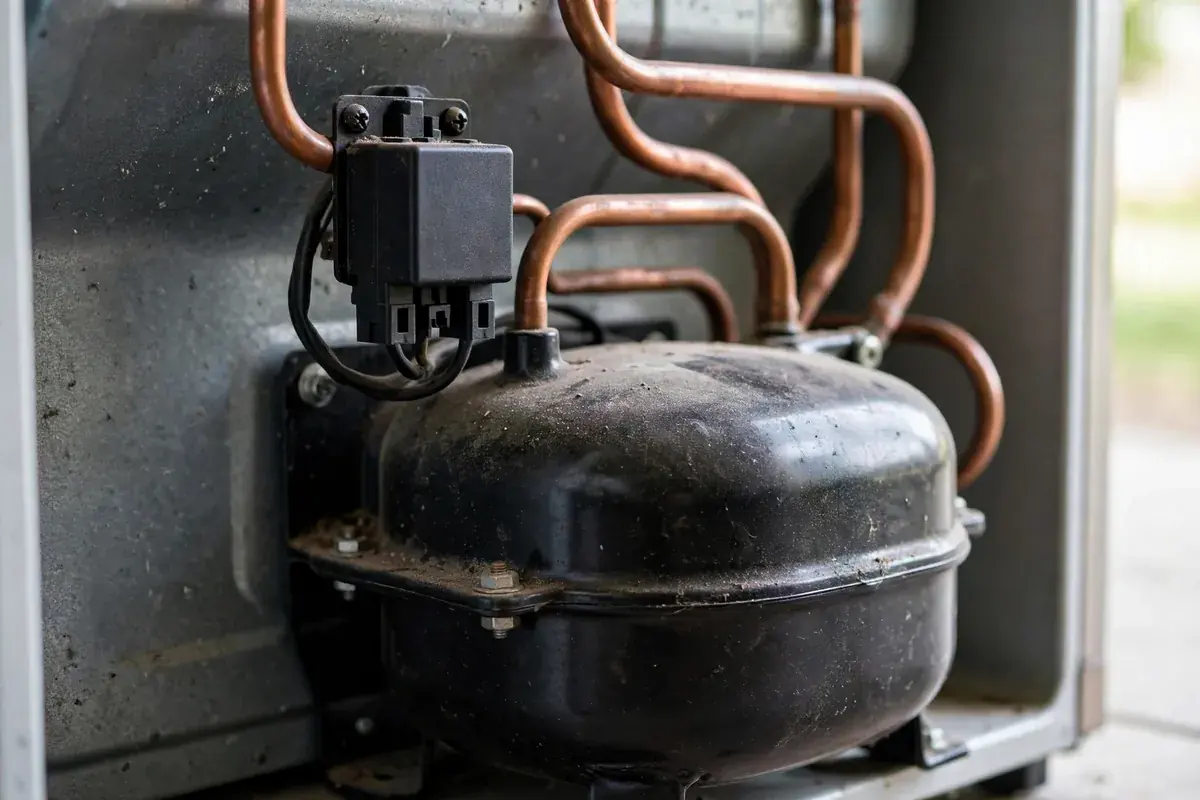
What makes a refrigerator hum loudly, ranked from cheapest to costliest
An unlevel cabinet or a fridge touching the wall
iFixit lists an out-of-level fridge first. Adjust the front feet with a bubble level. Then tip the cabinet back slightly so the doors close by themselves. Also check that the fridge, its water line and the drain pan are not rubbing the wall or cabinet.
Dirty condenser coils and a struggling condenser fan
Dust on the coils makes the fan and compressor work harder. That makes the hum louder and longer. iFixit also lists worn fan bearings and debris striking the blades. Spin the condenser fan by hand with the fridge unplugged. It should turn freely and quietly.
The evaporator fan and frost in the freezer
iFixit says ice buildup, bad bearings or a jammed motor can make the evaporator fan hum or squeal. Look for frost on the back wall of the freezer. A forced defrost can clear it. A fan that is jammed, noisy or won't start needs a new motor.
The ice maker or the dispenser
iFixit lists failures in the mold heater, the tray drive and the water inlet valve. If the hum only starts when you press the dispenser, suspect the ice. A block of ice or a bent auger may be the cause. Clear ice with warm water or a steamer, not a sharp tool.
Refrigerator compressor humming: the start relay, strain and failure
A hum with clicking can mean the compressor is not starting. A weak start relay is a common reason. iFixit lists three compressor problems: excess frost, a refrigerant leak and a plugged sealed system. Refrigerant work is not a homeowner job. A compressor that sounds like a lawn mower deserves a call today.
Fridge humming but not cooling: when the hum is a warning
If the fridge hums and the food is warming, the hum is not the problem. The cooling is. The usual suspects are an evaporator fan, a frosted coil and a failed defrost thermistor. A start relay, a capacitor or the compressor can also be the cause. A thermostat set between 35 and 40 degrees Fahrenheit is iFixit's target. Check it with a thermometer.
CDC says a refrigerator keeps food safe for about 4 hours without power. A warm fridge is a different case. The same clock is a sensible guide.
Safe checks for a humming fridge you can do with the doors closed
- Stand close and decide whether the sound comes from the fridge, the freezer or the back.
- Time it. Note whether it cycles or runs constantly.
- Check the level front to back and side to side, and adjust the feet.
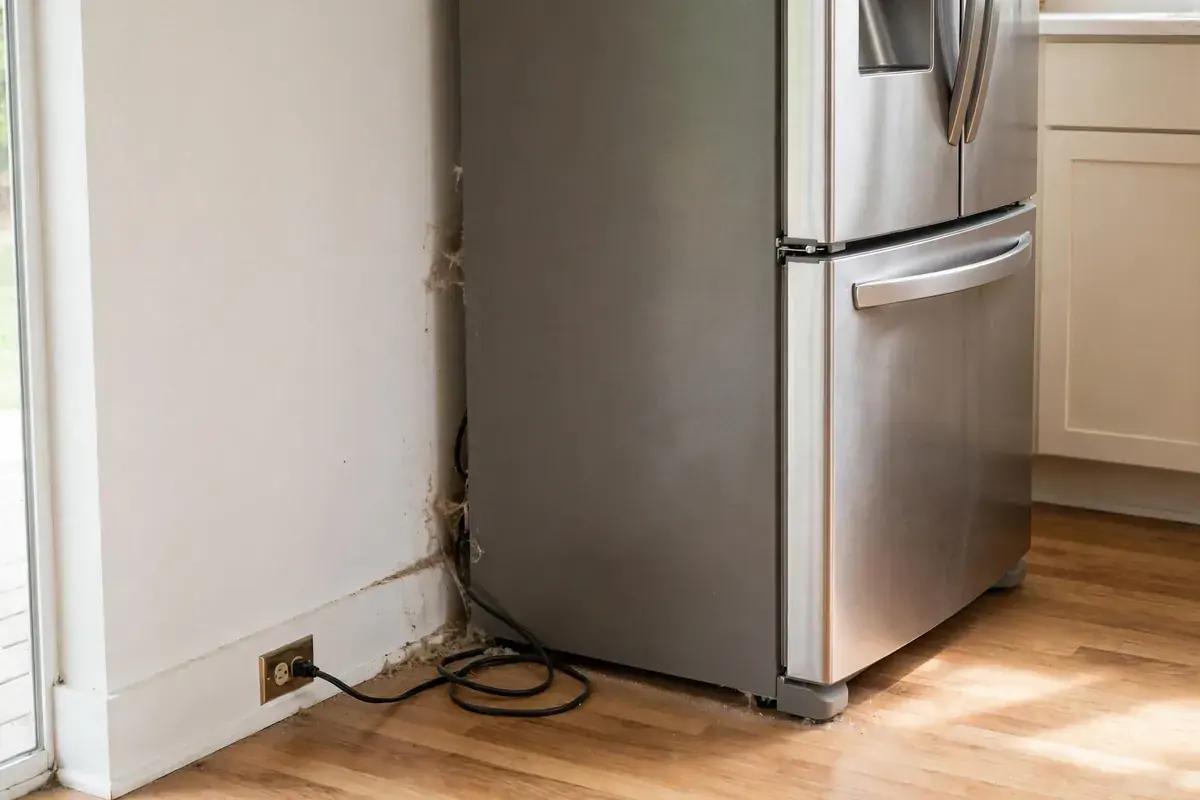
- Pull the fridge out only as far as the cord allows. Check that nothing touches the wall.
- Unplug the fridge and vacuum the coils and the fan area.
- Spin the condenser fan by hand and look for debris.
- Plug it back in, set a thermometer inside and listen again.
Do not tip the fridge on its side. iFixit warns that compressor oil can reach the capillary tube, which is hard to clear.
When to stop troubleshooting and call about a humming refrigerator
- Food is warm, or the thermometer reads above 40 degrees.
- Clicking starts and stops, or the hum is loud like a lawn mower.
- You smell burning or a chemical odor. Unplug the fridge first.
- You hear a hiss after the compressor stops, or you see oil on the tubing near it.
- The noise remains after the level, coil and fan checks.
- The fridge is under 5 years old. One source says check warranty coverage first.
Do not touch the electrical parts. iFixit notes that capacitors can hold a charge after the fridge is unplugged.
What a technician checks, and when repair beats replacement
A technician checks the coils and both fans. They check the defrost parts, the start relay and capacitor, and the compressor. Fan motors, relays and thermistors are routine repairs on a fridge in good shape. Compressor and sealed system work on an old unit is where replacement enters the talk. SlashGear's rule: repair when the quote is under half the price of a new unit. See refrigerator repair for how the visit goes.
Keeping a Las Cruces fridge quiet: dust, heat and clearance
A University of Arizona climate summary says Las Cruces gets about 8 to 9 inches of rain a year. Dust storms are most common in dry winter and spring. Dust is what lands on condenser coils. The same summary puts the June average high near 94.6 degrees. iFixit lists extreme outside temperatures as a cause of poor cooling. A fridge in a hot garage runs more of the time.
Refrigerator humming in Las Cruces NM: who to call once it is unplugged
Washer Repair Las Cruces serves Las Cruces NM with local technicians. If the refrigerator humming comes with warm food, clicking or a leak, call about refrigerator repair. Our washing machine repair page covers the laundry side of what we fix.
Call (575) 266-8348 and say what the hum sounds like and when it started. A person answers. The estimate is free.
A University of Arizona climate summary: Las Cruces dust storms and a Dec 8, 2009 visibility drop
The University of Arizona's climate summary for Las Cruces says dust storms are most common in the dry winter and spring. They also arrive at the leading edge of summer thunderstorms. PM10 standards are exceeded multiple times per year. It records visibility dropping below half a mile on December 8, 2009.
Dust lands on everything, including the condenser coils at the base or back of a fridge. SlashGear lists vacuuming dusty coils as a safe homeowner check. iFixit lists dirty coils among the causes of poor cooling. A careful technician looks at the coils first for that reason. The lesson: in a dust-prone city, a louder fridge is often a dirtier fridge.
Refrigerator humming questions from Las Cruces households
Is it normal for a refrigerator to hum?
Yes. A refrigerator hums when the compressor and fans run. It is normal after a defrost cycle or while the ice maker fills. A steady, soft hum that cycles on and off is healthy. Worry when the hum is new, louder, constant or comes with warm food.
What makes a refrigerator hum loudly?
A louder hum usually comes from an unlevel cabinet or dirty condenser coils. A failing condenser or evaporator fan, or an ice maker fault, can also cause it. A compressor under strain is less common but more serious. Level the fridge, vacuum the coils and note whether the food is cold.
Why is my fridge humming but not cooling?
If the fridge is humming but not cooling, the hum is a symptom. Common causes are a failed evaporator fan, a frosted coil and a bad defrost thermistor. A weak start relay or capacitor, or a compressor problem, can also be to blame. Check the thermostat and the thermometer, protect the food and call.
Is a refrigerator loud humming sound a sign the compressor is failing?
Not always, but it can be. Loud humming with clicking, warm food, a burning smell or oil near the compressor points toward the compressor or start relay. Loud humming alone is more often a dirty coil, a fan or a fridge that is not level. Check those first.
Can dirty condenser coils cause humming?
Yes. Dust and pet hair on the coils make the condenser fan and compressor work harder. The hum gets louder and runs longer. Unplug the fridge and vacuum the coils and fan area every few months. SlashGear lists this as a safe homeowner check.
Should I unplug a humming refrigerator?
Unplug it if you smell burning or chemicals or see smoke. Also unplug it before you clean the coils or fan. Otherwise leave it running to hold temperature, and call. If you do unplug it, keep the doors shut. CDC says food stays safe for about 4 hours without power.
Can Washer Repair Las Cruces diagnose a humming refrigerator in Las Cruces?
Yes, Washer Repair Las Cruces sends local technicians to Las Cruces homes. They check coils, fans, defrost parts, the start relay and the compressor. Call (575) 266-8348, describe the sound and say when it started. The estimate is free, and a person answers the phone.
How long can food stay in a Las Cruces fridge if it stops cooling?
About 4 hours with the doors shut, according to CDC. A full freezer about 48 hours. After 4 hours throw out meat, fish, eggs, milk and leftovers. On February 18, 2026, more than 10,000 Las Cruces residents lost power. Keep a thermometer in the fridge.
Call when the hum changes in your Las Cruces fridge
Tell us the brand, the style and what the sound is doing. Call (575) 266-8348: the estimate is free and a person answers.
Call (575) 266-8348